
Bozoma Saint John-Watson’s Nzema Royal Ghanaian Wedding: A Love Story That Reintroduced the World to the Beauty of Ghana
By ticketsghana · 27 August 2026 · 6 min read
Her father is Nzema, and she traces her paternal heritage to Awulae Blay VI, Paramount King of the Eastern Nzema Traditional Area in Atuabo.
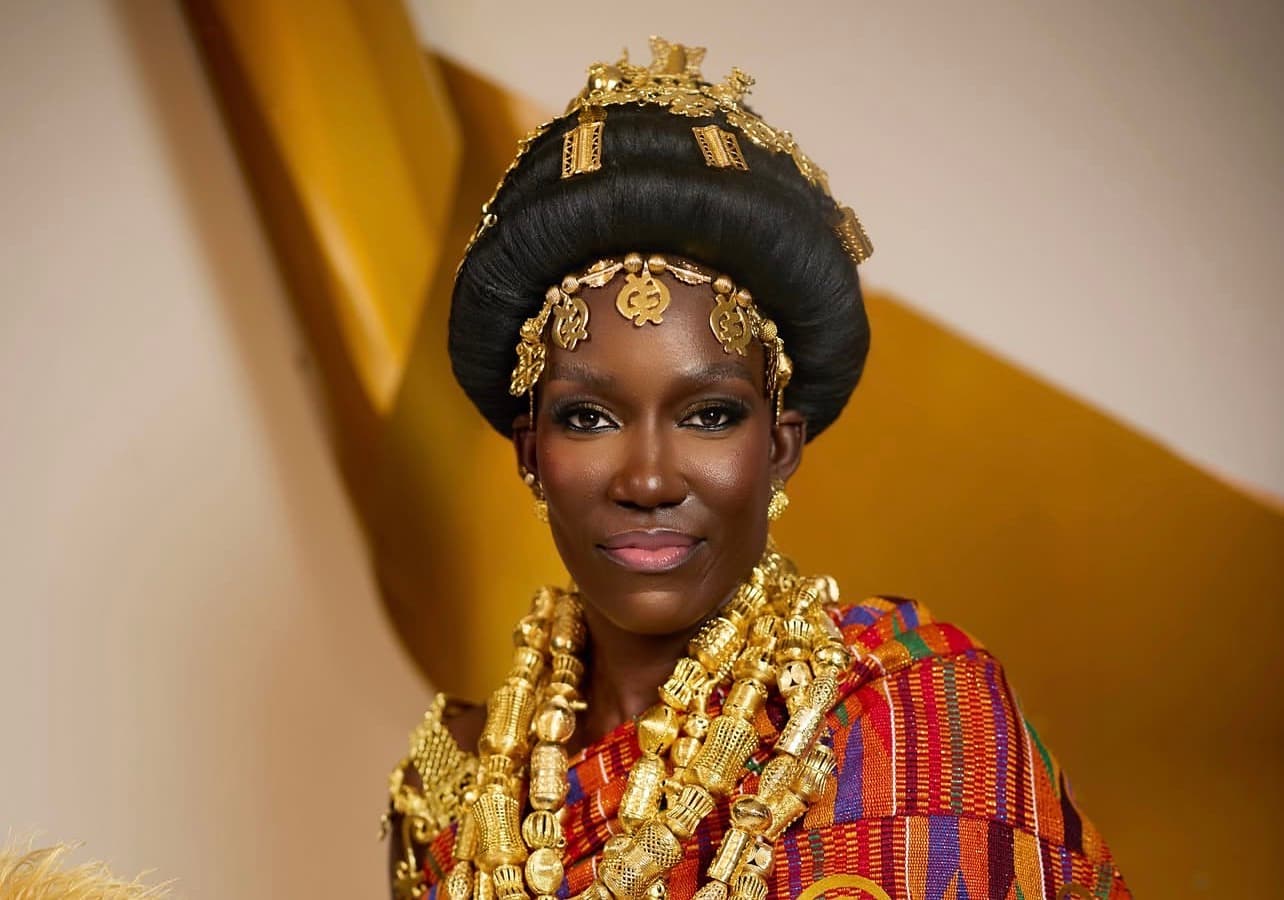
When the world watched Bozoma Saint John marry Keely Watson in Accra, Ghana, it was far more than another celebrity wedding. It became one of the most powerful celebrations of African identity, culture and heritage seen on the global stage in recent years.
Bozoma, one of the world’s most respected marketing executives, former Chief Marketing Officer at Netflix and current Real Housewives of Beverly Hills star, deliberately chose to celebrate her marriage through an authentic Akan traditional ceremony before her planned Western wedding in Los Angeles. In doing so, she reminded millions across the world that Africa’s history did not begin with slavery—it began with kingdoms, royalty, innovation, tradition and generations of proud people. ( People.com )
“Call Me By My Name”
One of the most talked-about moments came from Bozoma’s Instagram post, where she wrote:
“Call me by my name.
Bozoma Afiba Mamekyi Arthur Saint John-Watson.
QUEEN for short.”
Those words were not written for attention.
They were a declaration of identity.
Rather than introducing herself simply as a celebrity, entrepreneur or television personality, she introduced herself through her heritage—through the names that connect her to generations before her.
It was a reminder that names carry history.
Names carry families.
Names carry kingdoms.
A Daughter of Two Royal Bloodlines
Bozoma explained that she descends from royalty on both sides of her family.
Her father is Nzema, and she traces her paternal heritage to Awulae Blay VI, Paramount King of the Eastern Nzema Traditional Area in Atuabo.
Her mother’s family comes from Ahanta, where she belongs to the Obrempong Royal Stool of Mpintsin and the Ntwia Ebusua.
In Akan tradition, inheritance follows the maternal line, making this connection especially significant.
Instead of hiding her ancestry, she celebrated it openly before a global audience.
For many Ghanaians, especially young people, it was a beautiful reminder that our traditional institutions remain an important part of our identity.
Wearing History Instead of Fashion
Perhaps the most powerful sentence in her entire message was this:
“So when I stood to be married, I wore my history.”
Those eight words captured everything.
Her wedding was not designed around luxury brands or international fashion labels.
Instead, every detail reflected Ghana.
Her magnificent Kente cloth was handwoven in Bonwire over four months.
Every thread carried meaning.
Every Adinkra symbol represented wisdom, courage, unity and spirituality.
This was not simply clothing.
It was storytelling woven into fabric.
It reminded the world that Kente is not merely colourful cloth.
It is one of Africa’s greatest artistic achievements.
The Weight of Gold
Another unforgettable part of her reflection described the extraordinary amount of traditional gold she wore.
Gold adorned her neck.
Her wrists.
Her ankles.
Her hair.
Across Akan history, gold has never simply represented wealth.
It symbolises leadership, responsibility, honour and inheritance.
Bozoma explained that she wanted to feel its weight—not because of luxury, but because generations of Akan royalty had carried that same symbolism before her.
Her appearance reminded viewers that Ghana’s Gold Coast history extends far beyond colonial narratives.
Every Detail Told a Story
Nothing about the ceremony was accidental.
Her hairstyle reflected traditional Akan customs.
Her jewellery represented family heritage.
The colours around her waist symbolised sacrifice, ancestry, beauty and preciousness.
Among the Adinkra symbols she proudly wore was Gye Nyame, meaning “Except God.”
That choice carried a profound spiritual message.
After celebrating kings, queens and royal ancestry, she reminded everyone that above every throne stands God.
It was perhaps the most Ghanaian statement of all.
Family Before Fame
Although celebrities from Hollywood, business, sports and entertainment attended the wedding, Bozoma made it clear that the true stars of the occasion were her family.
She honoured her mother.
She celebrated her daughter Lael.
She recognised her sisters by blood and by choice.
Instead of allowing celebrity status to overshadow the ceremony, she centred the people who shaped her life.
That reflects the essence of traditional Ghanaian marriage.
Marriage is never simply about two individuals.
It is about two families becoming one.
A Wedding Rooted in Ghanaian Tradition
The ceremony itself followed Akan customs rather than Western wedding traditions.
Because her father could not travel due to ill health, former President Nana Addo Dankwa Akufo-Addo hosted the ceremony at his residence, fulfilling an important traditional role within the marriage process. ( Us )
Nearly 1,000 guests attended the celebrations, including international celebrities, family members and friends from across Ghana, the United States and the United Kingdom. ( Us )
Rather than focusing on spectacle, the event highlighted centuries-old Ghanaian customs that continue to shape marriage today.
A Message to Ghana and the African Diaspora
Perhaps the most emotional part of Bozoma’s message came near the end.
She wrote:
“I hope Ghanaians see home.
I hope the diaspora remembers that slavery is not the beginning of our story.
Before the ships and chains, we had names, families, kingdoms and traditions worthy of awe.”
These words resonated across social media because they spoke directly to millions of Africans and people of African descent worldwide.
Too often, African history is introduced through colonisation or slavery.
Bozoma challenged that narrative.
She reminded the world that African civilisation, governance, architecture, kingdoms, trade, spirituality and culture existed long before Europeans arrived on the continent.
It was not an attempt to erase painful history.
It was an invitation to remember the history that came before it.
More Than a Celebrity Wedding
This wedding succeeded because it achieved something few modern celebrity weddings accomplish.
It educated.
It inspired.
It celebrated.
It elevated Ghanaian culture without trying to modernise or simplify it for foreign audiences.
For many people outside Africa, it became their first introduction to Akan marriage traditions.
For Ghanaians, it became a source of immense national pride.
It showcased Ghana not only as a tourism destination but as the home of rich cultural traditions that continue to thrive.
Why This Wedding Matters
Bozoma Saint John-Watson’s wedding will be remembered for more than its beauty.
It demonstrated that tradition and modern success can coexist.
A global business executive chose to honour her roots before the world.
She proved that embracing African identity does not diminish global influence—it strengthens it.
Her wedding reminded us that our languages, fabrics, gold, customs, family structures and traditional leadership remain valuable in the modern world.
At a time when many cultures struggle to preserve their heritage, Bozoma chose to wear hers proudly.
And in doing so, she gave the world something unforgettable.
She did not simply wear Kente.
She wore history.
She did not simply wear gold.
She carried generations.
She did not simply celebrate a marriage.
She celebrated Ghana.
And perhaps her greatest gift was reminding every Ghanaian—and every member of the African diaspora—that before the world gave us labels, we already had names, families, kingdoms and traditions worthy of awe. ( techradar.com )